
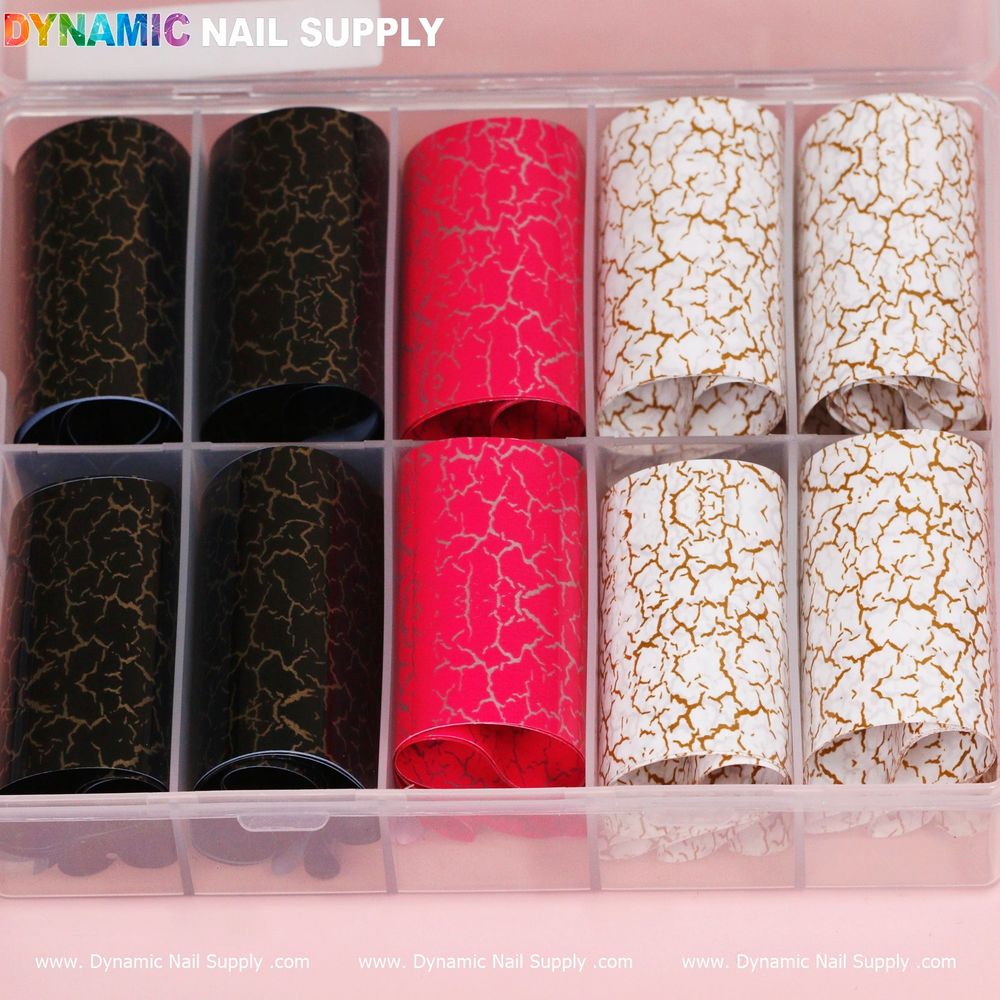
Marble-style transfer foils are an easy way to add dramatic veining and visual depth to manicures without painting intricate lines by hand. These marble nail art foils give a distinct fractured or cracked-marble look that suits bold accents and full-coverage designs alike.
Quick comparison: foils versus other nail finishes
Before choosing materials for a service or at-home set, it helps to know what foils do differently. Foils produce a high-contrast, patterned layer that reads like a surface finish rather than a pigment or powder. Compared to decals, hand-painting, or chrome powders, foils often deliver sharper linear patterns and instant texture with minimal brushwork.
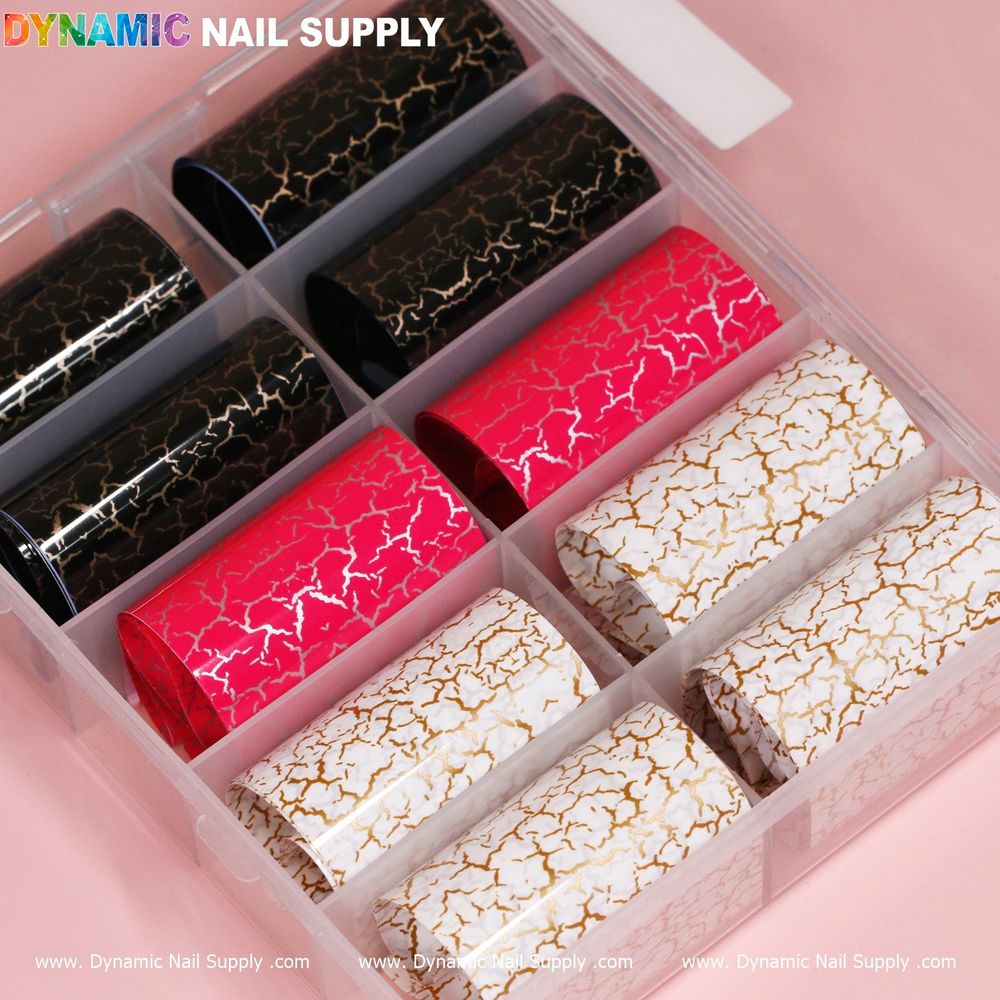
What to expect from these marble nail art foils
These are design foils in a marble style, built to transfer a cracked or veined marble appearance onto nail surfaces. The product tags include variations like “Crack marble,” “Cracked marble,” and “Marble Cracks,” which describe the visual theme rather than technical dimensions. They are sold as a nail foil option at a listed price of $6.00; prices may change.
If you want to buy a sample, see the marble nail art foils pack.
Who should choose marble nail art foils
- Busy salon techs who need a fast way to create striking marble looks across multiple clients without hand-painting every vein.
- Design-focused artists who want a reliable base pattern to layer with accents, gems, or selective polish work.
- Retail customers seeking a single-sheet solution to produce consistent marble effects at home.
Best uses in practice
- Accent nails that require bold veining to contrast with solid colors.
- Full-coverage marble sets when paired with a complementary base shade.
- Layered compositions where foil pieces are cut and arranged for unique layouts.
Who might prefer something else
Marble foils excel at delivering specific visual textures, but they’re not always the ideal choice. Consider alternatives if you need:
- Ultra-fine hand-painted detail: Artists aiming for highly controlled, custom veining or colour blends may prefer freehand painting or water-marbling techniques.
- Subtle shimmer or metallized tones: Chrome powders and metallic pigments can offer smoother reflective finishes without obvious seam lines.
- Adhesive-free color applications: Powders, gels, or polishes may be simpler for full-coverage color changes without the transfer step foils require.
Practical application tips
Working with marble-style transfer foils is largely about surface preparation and timing. Start with a clean, cured base layer so the foil adheres evenly. Use small snips to test placement, and press gently to transfer pattern sections rather than trying to cover the whole nail at once. For best visibility, contrast the foil with a complementary base color.
Reserve top coats and sealing steps until the foil is fully adhered; a secure finish helps maintain the appearance. When troubleshooting, lifting usually indicates insufficient adhesion or an unclean working surface, so recheck prep steps before reapplying.
Care and safety notes
- Store foils flat and away from direct sunlight or moisture to avoid curling or discoloration.
- Avoid applying foils to irritated or broken skin and follow standard salon hygiene practices during application.
- When removing, do not force foil off; use recommended polish removers or gentle soaking methods to avoid damaging the natural nail.
Final decision guide
If you prioritize speed, repeatability, and bold marble textures, marble nail art foils are a strong match. They suit technicians and hobbyists who like to layer and embellish without extensive painting. If you need delicate, hand-rendered veining, smoother chrome-like finishes, or adhesive-free color changes, evaluate powders, paints, or decals instead.
For a straightforward, marble-patterned transfer option that fits many salon workflows, this marble-style foil is an efficient tool to have on hand.
